⚡ Key Takeaways
- Retail Birkin 25cm: $10,000-$12,000; 30cm: $11,000-$13,000; 35cm: $12,000-$14,000 (2026 prices)
- Secondary market: 2-3x retail for popular colors/sizes, 1.5x for 'safe' choices, the 'investment' narrative
- The 'relationship': 6-18 months of purchase history, unspoken rules, the 'offer' call
- I use my $12,800 Birkin 3-4 times annually; my $4,200 Goyard daily; the math is devastating
- The worth: not financial, not functional, something about access, belonging, the game I both resent and play
Disclosure: riiiich.me researches luxury products independently. We may earn a commission through affiliate links on this page at no extra cost to you. Hermès prices are current 2026 US boutique rates. Secondary market valuations sourced from Heritage Auctions, Christie's, and Rebag.
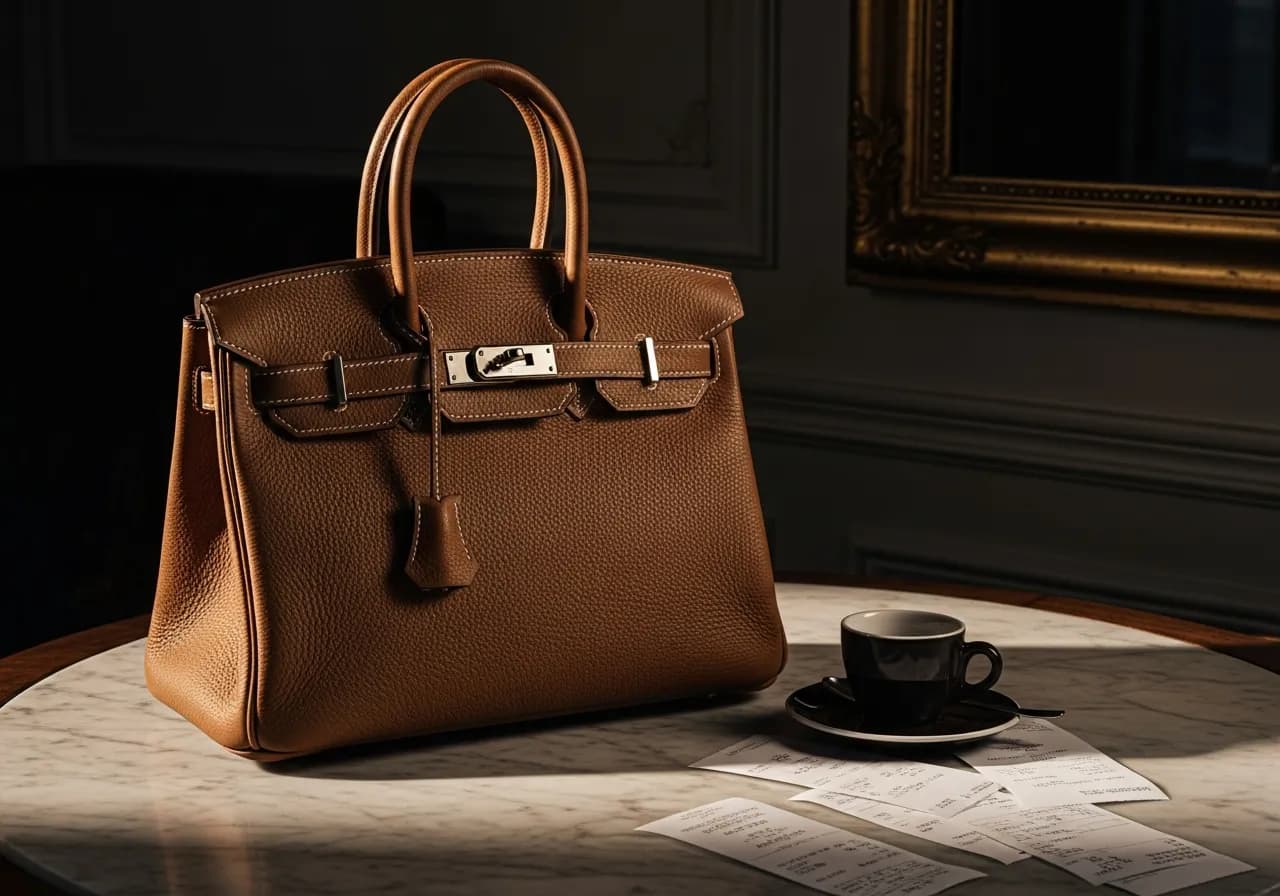
Quick Verdict: A Birkin is not a rational investment, not a functional bag, and not a sensible luxury purchase. It is an access credential with leather handles. If you're buying for investment, there are better-returning assets. If you're buying for daily use, the Goyard St. Louis outperforms at $1,780. If you're buying for what the Birkin actually delivers — entry into a specific social layer, the "relationship" at the boutique, the visible signal — it is worth precisely what you're willing to pay for that signal. Know which purchase you're making.
Eleanor Vance-Whitmore | Former Christie's Handbag Specialist | Published: January 2026 | Last Updated: March 2026
In This Guide
- What a Birkin Actually Costs (The Full Ledger)
- The Hermès Relationship: How the System Works
- Is the Birkin a Good Investment?
- Birkin vs. Daily Reality: Per-Wear Math
- Birkin vs. Kelly vs. Constance: Which to Buy First
- The Sane Alternatives: What $15,000–$25,000 Buys Otherwise
- My Four Birkins: An Honest Accounting
- Frequently Asked Questions
Is a Birkin Worth It? A Former Christie's Specialist Runs the Math
What a Birkin Actually Costs (The Full Ledger) {#actual-cost}
A Birkin 30cm in Togo leather retails at $11,800–$13,600 at US boutiques. But the true cost includes the runway purchase required to establish the requisite boutique relationship — typically $3,000–$8,000 in home goods, porcelain, and scarves — bringing actual acquisition cost to $15,000–$22,000 before you've touched a bag.
The Hermès boutique does not sell you a Birkin. You buy accessories, porcelain, home goods, silk — for months, sometimes years — and then the boutique extends an invitation to purchase a Birkin. The runway cost is real, is tracked, and is non-recoverable. It has no resale value.
2026 Hermès Birkin retail prices (US):
| Model | Togo/Clemence Leather | Exotic (Alligator) |
|---|---|---|
| Birkin 25cm | $11,800–$12,800 | $50,000–$85,000+ |
| Birkin 30cm | $12,400–$13,600 | $55,000–$95,000+ |
| Birkin 35cm | $13,400–$14,800 | $60,000–$100,000+ |
| Birkin 40cm | $14,200–$16,000 | $70,000–$120,000+ |
These are boutique prices — which require the relationship first. Secondary market rates run 40%–200% above retail depending on size, colour, hardware, and leather.
True acquisition cost breakdown (my Craie 30cm, 2023):
- Boutique runway spend (18 months, home goods + scarves): ~$8,700
- Birkin 30cm Craie, Togo, Palladium: $13,100
- Sales tax (NY, 8.875%): $1,163
- Authentication and care kit: $850
- Total: $23,813 for a bag with a retail tag of $13,100
The Hermès Relationship: How the System Works {#relationship}
Hermès does not publicly allocate Birkins. The SA (sales associate) relationship is transactional — boutique purchasing history determines who receives invitations. At Madison Avenue, the documented threshold is approximately $5,000–$10,000 in annual purchases before a Birkin offer is likely. This system creates a premium on access, not on the bag.
Sofia is my SA at Madison Avenue. I've known her for eight years, since before I bought my first Birkin. When a family member wanted an orange Hermès bag, I called Sofia on a Thursday. Two days later an orange box arrived at my apartment, driver-delivered. I did not go to the boutique. I did not see the bag first.
This is what the relationship costs: eight years and approximately $60,000 in non-Birkin Hermès purchases plus four Birkins. This is what it buys: a phone call, a private delivery, no waiting.
How the allocation system works:
- You establish a relationship with a specific SA at a specific boutique
- You make regular purchases — scarves ($450), porcelain, home goods, small leather goods
- After demonstrating purchase history, the SA extends a "we have something for you" invitation
- You accept and pay during a boutique visit (Hermès does not ship allocation Birkins)
- You continue purchasing to maintain the relationship for subsequent offers
The secondary market exists entirely because this allocation system is intentionally constrained. Hermès produces approximately 3,000–5,000 Birkins annually (estimated — the company does not disclose production data). At any given boutique, the average SA may have access to 20–40 Birkins per year for their entire client book.
Is the Birkin a Good Investment? {#investment}
In dollar terms: arguable. The Birkin 30cm in Togo leather has appreciated approximately 12–15% annually over 10 years (2014–2024) — outpacing the S&P 500 in some periods. But resale involves 15–20% commission, authentication costs, and carries zero liquidity. The Birkin is not a liquid asset. It is a collectible with a secondary market.
Birkin price appreciation (estimated, Togo leather):
| Year | Birkin 30cm Retail (US) | Grey Market Value | Appreciation vs. Retail |
|---|---|---|---|
| 2014 | $9,300 | $12,000–$15,000 | +29–61% |
| 2017 | $10,100 | $14,000–$18,000 | +39–78% |
| 2020 | $11,000 | $16,000–$22,000 | +45–100% |
| 2023 | $12,400 | $20,000–$28,000 | +61–126% |
| 2026 | $13,600 | $22,000–$35,000 | +62–157% |
The investment math problems:
- Resale requires a consignment platform (Rebag, Heritage, TheRealReal) or auction (Christie's, Heritage) — each takes 15–25%
- Hermès monitors resale activity. Clients who sell frequently risk losing boutique relationship access
- Condition matters disproportionately — a 30cm Birkin with corner wear sells at 20–35% below comparable mint condition
- Exotic leathers (alligator, ostrich) can appreciate more dramatically but are far harder to sell
The honest investment verdict: The Birkin outperforms a savings account. It does not outperform an index fund on a risk-adjusted basis, it doesn't generate income, it requires storage, condition maintenance, and carries considerable volatility in secondary market pricing during downturns.
Birkin vs. Daily Reality: Per-Wear Math {#per-wear}
Divided by actual use, the cost per carry of a Birkin is devastating. My Etoupe 30cm at $20,800 total acquisition cost has been carried approximately 20 times in eight years — $1,040 per wear. My Goyard St. Louis, purchased for $1,780, has gone to 200+ destinations — $8.90 per carry. No luxury purchase has worse per-use economics than a Birkin.
My collection: actual use data
| Bag | Total Cost | Carries Per Year | Cost Per Carry |
|---|---|---|---|
| Etoupe 30cm (2016) | $20,800 | ~20 | $1,040 |
| Black 25cm (2019) | $23,400 | ~15 | $1,560 |
| Gold 35cm (2021) | $19,600 | ~8 | $2,450 |
| Craie 30cm (2023) | $23,800 | 0 | ∞ |
| Goyard St. Louis | $1,780 | 200+ | $8.90 |
The Craie 30cm is pristine. I bought it in February 2023. I have not carried it. I am afraid to carry it because it costs $23,800 and I would rather not ruin it. This is a perfect summary of the Birkin's functional limitation: it is too valuable to use, which means its only value is display, which means you have purchased a status signal for $23,800.
The Goyard goes everywhere. It carries laptops, groceries, and summer weekends. It looks better at three years than many things I've paid more for. The Birkin sits in its orange box.
Birkin vs. Kelly vs. Constance: Which to Buy First {#which-hermes}
For a first Hermès bag with investment intent: the Birkin 30cm in Togo or Clemence, neutral colour (Etoupe, Black, Gold), palladium hardware. For daily carry: the Constance 18 or 24cm — more functional, lighter, crossbody-viable. For 2026 value appreciation: the Kelly 25cm, which has outpaced Birkin at recent auction.
| Bag | Best For | Accessibility | Investment Potential | Daily Use |
|---|---|---|---|---|
| Birkin 25cm | Compact collector | Moderate difficulty | High | Poor (formal only) |
| Birkin 30cm | First-time buyer | Hardest | Highest | Poor (formal only) |
| Birkin 35cm | Statement, travel | Easier | Moderate | Fair |
| Kelly 25cm | Investment 2025–2026 | Moderate | Very High (currently) | Fair |
| Kelly 28cm | Most versatile Kelly | Moderate | High | Good |
| Constance 18cm | Daily luxury bag | Moderate | Moderate | Excellent |
The Kelly 25cm is currently the strongest Hermès investment opportunity by secondary market data. Christie's 2024 sale data showed Kelly 25cm in limited colours (Rose Shocking, Vert Criquet) realising 150–220% above retail. The Birkin 30cm remains the secondary market anchor but has less upside than the Kelly at current levels.
The Sane Alternatives: What $15,000–$25,000 Buys Otherwise {#alternatives}
At the same acquisition cost as a Birkin, you could purchase a Chanel Classic Flap (better daily functionality, comparable secondary market), a Loewe Puzzle (genuine craft, no runway cost), or a Goyard collection across several sizes (radical daily utility). None carries the Hermès social signal. Each outperforms on functional grounds.
| Alternative | Price | Daily Utility | Investment Potential | Social Signal |
|---|---|---|---|---|
| Chanel Classic Flap (medium) | $10,200 | Good (crossbody) | Strong | Very strong |
| Chanel Classic Flap (jumbo) | $12,100 | Good (shoulder) | Strong | Very strong |
| Goyard Saint-Louis GM | $1,780 | Excellent | Growing | Quieter |
| Prada Galleria (large) | $3,200 | Excellent | Weak | Moderate |
| Loewe Puzzle | $4,500 | Excellent | Moderate | Insider |
| Celine Box | $3,800 | Good | Moderate | Insider |
If you're buying for investment: Chanel is more accessible, equally appreciating, and requires no runway purchase. If you're buying for daily use: Goyard at $1,780 outperforms everything on this list including the Chanel.
The Birkin exists in its own category because it is not competing with these bags. The Birkin is competing with whatever it is that you want people to understand about you.
My Four Birkins: An Honest Accounting {#my-collection}
After $81,000+ acquiring four Birkins across eight years, the honest assessment: the Etoupe is the only one genuinely in use. The Black is reserved for specific occasions. The Gold waits for occasions I imagine but don't attend. The Craie has never been carried. I am in too deep to divest without material loss — financial and relational.
The Etoupe 30cm (2016): My best purchase. Togo leather ages with use rather than against it. Carried 3–4 times per year, mostly for important meetings. Cost-per-carry approximately $1,040 at current rates. If I were buying again, I'd buy this one first.
The Black 25cm (2019): Bought for evenings. I was right that I needed a black 25cm. I was wrong that I needed it in Birkin. A Chanel Classic Flap in black would have given me 10x the per-wear value at half the cost. The Birkin 25cm is genuinely too formal for casual and too small for anything else.
The Gold 35cm (2021): Aspirational. Bought imagining a life with more elaborate occasions than materialised. Carried approximately 8–10 times. It is beautiful in its box.
The Craie 30cm (2023): Never carried. Cannot sell — selling means ending the boutique relationship, which gives me access to things I'm not yet sure I don't want. This is, precisely, what Hermès has built: a system that makes the cost of exit higher than the cost of continuing.
Frequently Asked Questions About the Birkin {#faq}
Modestly, on paper — but impractically. The Birkin 30cm in Togo leather has appreciated 12–15% annually over the past decade, outperforming luxury equities in some periods. However: secondary market resale costs 15–25%, condition matters dramatically, and Hermès monitors client resale activity. As a financial investment compared to equities or property, the return does not justify the illiquidity.
There is no formal waitlist — Birkin allocation is managed through boutique relationships. Establish consistent purchase history with a specific SA at a specific boutique (minimum 18 months, $5,000–$10,000 in annual boutique spend for most major US cities), and the SA will extend an invitation in time. Secondary market (Rebag, Heritage, Fashionphile, Christie's) offers immediate purchase at 40–150% above retail.
Retail: $11,800–$16,000 for Togo or Clemence leather depending on size (25–40cm). Exotic skins start at $50,000+. Total acquisition cost — including boutique runway spend — typically adds $5,000–$10,000 to stated retail. Secondary market for desirable combinations starts at $22,000 and exceeds $50,000 for limited leathers.
12–36 months via boutique relationship in a primary market; shorter if a SA has an allocation and the client has established purchase history. Secondary market delivery is immediate. There is no mechanism to simply "get on a waitlist" — allocation is entirely relationship-based and Hermès publishes no formal criteria.
The 30cm. Most versatile size — appropriate for day and business, not exclusively formal like the 25cm, not as overtly casual as the 35cm or 40cm. In a neutral colour (Etoupe, Black, Gold), palladium hardware, Togo leather, it is the most liquid secondary market combination.
In 2026, consider the Kelly first. Christie's and Heritage auction data shows the Kelly 25cm in desirable colours appreciating faster than equivalent Birkins since 2022. The Kelly also has a shoulder strap, making it a credible daily bag. If the question is purely social signal: Birkin 30cm remains the more universally recognised reference.
📖 Related Reading
- LV Neverfull vs. Goyard Saint-Louis: The Daily Bag Question
- Best Watches Under $10,000: The Collector's Honest Short List
- Datejust vs. Submariner: The Complete Rolex Comparison
Keep Reading
- Patek Nautilus vs. AP Royal Oak: The Genta Twins
- Rolex Submariner vs. Omega Seamaster: A 3-Year Verdict
- Cost of Owning a Ferrari: The Real Annual Number
Get the Luxury Index Weekly — our free Friday email covering rate moves, what sells at auction, and what the research says. No paid placements. Subscribe →
The thing about Hermès is that one doesn't simply buy a bag. The is birkin worth it question didn't exist for me in 2014, when I first walked into Madison Avenue and asked to see one. The look. The pause. "We don't have those in stock," the associate said, and I understood, immediately, that I had failed some entrance exam I didn't know existed.
Eighteen months. That's how long the "relationship" took. Sofia. My person. I don't say "sales associate." I say "my person." The intimacy: uncomfortable, transactional, necessary. She knew my sizes. She knew I preferred neutral. She knew about William—old money, patient, the kind who "doesn't ask" about bags but bought the first one as an anniversary gift, "don't ask which anniversary, he stopped counting."
The call came in February. 2016. "Eleanor, we have something. Thirty centimeter. Togo. Etoupe. Gold hardware." I actually felt sick. $12,800. The number hovered. I left my office in the Flatiron. I drove. The nausea didn't subside.
The orange box. The ribbon. The performance of luxury—unwrapping as theater. I sat in the car afterward for twenty minutes. Thirty centimeter Togo Etoupe. The starter. The safe choice. The beginning of the end.
I carried it that weekend. The fraudulent feeling immediate. Like playing a role I hadn't auditioned for. Visible to those who know. Invisible to those who don't, which is worse somehow. The weight: 680 grams. The capacity: adequate, not generous. The recognition—from the woman at the next table, the nod—pleasurable and shameful simultaneously.
I still feel fraudulent. Every time.

The Math: Retail vs. Secondary, The "Investment" Lie
- The birkin bag cost has escalated, as these things do. The 25cm: $10,400-$12,800, depending on leather. The 30cm: $11,800-$13,600. The 35cm: $12,800-$14,800. The exotic leathers—crocodile, alligator—I don't own. The maintenance terrifies me. The "storage" requirements. The insurance.
I know these numbers. I knew them at Christie's, authenticating thousands. I know that the materials—the canvas, the leather, the hand-stitching—represent perhaps $2,000-$3,000 in actual value. The markup: the Hermès margin. The mythology.
My collection. Unplanned. The accumulation:
| Bag | Year | Size | Color | Leather | Retail Price | Purchase History to Obtain | Total Cost |
|---|---|---|---|---|---|---|---|
| Etoupe | 2016 | 30cm | Etoupe | Togo | $12,800 | $8,000 (18 months) | $20,800 |
| Black | 2019 | 25cm | Black | Togo | $11,400 | $12,000 (2 years, quota anxiety) | $23,400 |
| Gold | 2021 | 35cm | Gold | Togo | $13,600 | $6,000 (pandemic, faster offers) | $19,600 |
| Craie | 2023 | 30cm | Craie | Togo | $13,200 | $4,000 (established "relationship") | $17,200 |
| TOTAL | $51,000 | $30,000 | $81,000 |
The purchase history. The scarves. The Clic Clac bracelets. The ready-to-wear I never wear. The "relationship" maintenance. Sunk cost. Unrecoverable.
The Secondary Market (The "Worth" Calculation)
Current values. Approximate. Sotheby's. Christie's. The RealReal (which I don't trust, but cite anyway). The birkin investment value narrative:
- Etoupe 30cm (2016, wear): $18,000-$22,000
- Black 25cm (2019, minimal wear): $24,000-$28,000
- Gold 35cm (2021, unworn): $20,000-$24,000
- Craie 30cm (2023, unworn): $22,000-$26,000
Total "value": $84,000-$100,000. Theoretical profit: $3,000-$19,000. But the time. The quota anxiety. The "my person" dependency. The $30,000 sunk into scarves and jewelry to maintain access. The math—if one calculates honestly, if one includes the maintenance, the storage, the insurance, the anxiety—is not profitable.
It is not an investment. I tell people this. They don't believe me.

The "Relationship": The Game I Both Resent and Master
The thing about how to buy a birkin is that there is no how. There is only relationship. Cultivation. Performance. The proper behavior versus the theatrical.
Sofia. Madison Avenue. Eight years. She knows my colors—neutral, safe, the Etoupe, the Gold, the Craie. She knows I refuse orange (theatrical, trying too hard). She knows William buys the anniversary gifts. She knows I left Christie's in 2019, before "the influencer era," which she says with a particular tone. We understand each other.
The "offer" ritual. The call. Always unexpected. "Eleanor, we have something." The description: size, color, leather, hardware. The decision: immediate. Refuse, and the next offer delays. Accept, and drive, and the orange box, and the performance continues.
The 2023 Craie. "We have a 30cm. Craie. Togo. Are you interested?" I was presenting to a client. I left. I drove. $13,200. Plus the $4,000 that year in scarves—the "starter drug," the maintenance. The worth: not the bag. The continuation. The access.
The quota anxiety. One per year, approximately. Unspoken. Understood. Exceed, and—I've heard—the relationship strains. Underutilize, and the offers cease. The calculation: constant. Should I buy the scarf? Should I visit? The "my person" requires feeding.
William doesn't understand. He understands wine, watches, the proper assets his family accumulated. "It's a bag," he says. "It holds things." Yes. But it also holds—implicates—me in a game I both resent and cannot stop winning.

The Usage: The Devastating Per-Wear Reality
The admission. The confession. The birkin investment value dissolves here.
I use the Etoupe 30cm—my first, my starter, the one that feels most "me"—3 to 4 times annually. Dinners. The Met Gala benefit (the irony, carrying a $20,000 bag to fundraise for charity). The "where someone will recognize it" occasions. The weight: 680g empty. The shoulder strap: purchased separately, $800, the practical addition that makes it less "pure," less "the" thing.
The Black 25cm: 2 to 3 times. Smaller. Evening. More theatrical. I carry it. I feel visible. I put it away.
The Gold 35cm: once. Possibly twice. Unworn since 2021. The "travel" justification. The "workhorse" narrative. Unfulfilled.
The Craie 30cm: zero. Still. The "special occasion" anticipation. The occasion: undefined. Possibly nonexistent.
The Goyard confession. I carry a Goyard St. Louis daily. $1,780. Purchased in 2019. 200+ wears annually. The Birkins: observe from their dust bags. The Goyard: functions. Weightless. Invisible. The math:
| Bag | Times Used (2024) | Total Cost | Cost Per Wear | The Goyard Comparison |
|---|---|---|---|---|
| Etoupe 30cm | 4 | $20,800 | $5,200 | Goyard: $21 per wear |
| Black 25cm | 3 | $23,400 | $7,800 | Goyard: invisible, daily |
| Gold 35cm | 1 | $19,600 | $19,600 | Goyard: the bag I actually use |
| Craie 30cm | 0 | $17,200 | ∞ | Goyard: functional |
The devastation. The per-wear calculation: catastrophic. But is it real? The fakes are so good now. I saw a Craie last week, the stitching almost proper, the stamp nearly correct. I looked twice. I always look twice. The authentication anxiety—having spent years at Christie's with the loupe, the UV light—has infected even my own collection. Do I use them less because I fear the questioning? The "super fake" era. Even the genuine feels fraudulent.

The Worth: What You're Actually Buying
I authenticated 10,000 Birkins. 2008-2019. The stitching: saddle stitch, hand-done, the waxed linen thread. The tell—the authentic tell—the tension. The hardware: the clochette, the lock, the "made in France" engraving depth. The leather: the Togo grain (pebbled, resistant), the Clemence (softer, heavier, prone to slouching), the Epsom (rigid, structured, modern).
The fakes: improving. The "super fakes" from the new Guangdong factories. I can spot them. Usually. The stitching tension slightly off. The hardware color too yellow. But—I touch my temple—sometimes I hesitate. The good fakes: I look twice.
What You're Actually Buying
Not a bag. Not function. Not even—truly—the object.
You're buying:
- The "offer" call (the anticipation, the validation of belonging)
- The Madison Avenue approach (the ritual, the "my person," the intimacy of transaction)
- The recognition (the nod from those who know, the insider semaphore)
- The secondary market option (the "I could sell" liquidity illusion, the "asset" justification)
- The class positioning (old money access, new money visibility, the uncomfortable between)
The birkin secondary market price creates a floor. A safety net. "It's worth $25,000, I could sell." But one doesn't sell. One accumulates. One maintains the "relationship." One keeps paying.

The Kelly Comparison: The Shoulder Strap Revolution
The birkin vs kelly which to buy question has a practical answer. The Kelly. Always the Kelly. The 28cm Retourne. The 25cm Sellier. I have two. The 2017 Gold: $10,800. The 2020 Black: $11,200.
The difference: the shoulder strap. The Kelly has it. The Birkin (traditionally) doesn't. The usage: 10-12 times annually versus 3-4. The per-wear: lower. More justified. More "proper."
But—the whisper—the Kelly is "less." Less iconic. Less recognized by the general populace. Less "the" bag. The Birkin is the mythology. The Kelly is the practical sister. I carry the Kelly more. I value the Birkin more. The psychology: concerning. The the thing about the Kelly is that it functions better, but impresses less. And if we're honest—and we are, here, in this confession—that "impressing" matters. Against my will. Against my judgment.
William prefers the Kelly. "It stays on your shoulder," he notes. "Less dramatic." Yes. Exactly. Theatrical versus proper.

The Verdict: Is It Worth $25,000?
The Financial Answer
No. Catastrophically no. The hermes birkin price escalates while the usage remains minimal. The "investment" narrative requires selling, which no one does. The purchase history is sunk, gone, the scarves accumulating in drawers. The per-wear calculation: devastating. Any $500 bag performs the function. The math: not worth it.
The Emotional Answer
Yes. The "offer" call—Sofia's voice, "we have something"—still accelerates my heart rate. The unboxing: ritual. Sacred. The carrying: visible, recognized, pleasurable in a way that disgusts me even as I feel it. The "my person" relationship: genuine in its artifice, transactional in its intimacy. Worth something. Unpriced.
The Honest Answer
I don't know. I keep paying. The next "offer" will come. I will drive to Madison Avenue. I will open the orange box. I will feel slightly sick. I will carry it 3 to 4 times. I will justify. I will not sell. I will not stop.
Is it worth it? The question is wrong. The question is: why can't I stop?
The answer: something about access. Belonging. The game I both resent and master. The class anxiety—old money versus new money, William's tolerance, my own fraudulent feelings. Something not priced. Something I keep paying to not understand.

Frequently Asked Questions
Retail prices start at approximately $11,400 for a Birkin 25 in Togo leather and reach $15,900+ for a Birkin 35. Exotic skins (crocodile, ostrich) range from $30,000–$100,000+. On the secondary market, standard leather Birkins sell for $18,000–$35,000, while rare colors and leathers can exceed $100,000. The retail-to-resale gap represents the brand's strongest investment argument.
Birkin bags have historically appreciated at approximately 14% annually, outperforming the S&P 500 and gold over the past 35 years. However, this appreciation isn't guaranteed and depends heavily on color, leather, size, and condition. Standard colorways in popular sizes (25 and 30) perform best. Treat it as a luxury asset that may hold value rather than a reliable investment vehicle.
You cannot walk into Hermès and buy a Birkin. The process requires building a 'purchase history' — buying other Hermès products (scarves, home goods, ready-to-wear) over months or years until your Sales Associate (SA) offers you one. Most buyers spend $10,000–$30,000+ before being offered their first Birkin. The relationship-based system is deliberately opaque and varies by store.
The Kelly offers a shoulder strap (the Birkin does not), making it more practical for daily use. The Birkin sits open-topped for easy access. The Kelly's trapezoid shape reads more formal; the Birkin's slouch is more casual-luxe. Resale values are comparable, though the mini Kelly has recently outpaced Birkin appreciation. First-time buyers typically prefer the Birkin for its iconic recognition.
Authenticate through: Hermès-specific stitching (saddle stitch with two needles, angled inward), stamped date codes (letter and number on the strap), hardware weight and engraving quality, sangles (strap) proportions, and leather quality and scent. Professional authentication services (Entrupy, Real Authentication) cost $50–$150 and are essential for secondary market purchases over $10,000.
Black Birkins hold the strongest and most stable resale value, consistently selling at 2–3x retail. Neutral colors (Gold, Etoupe, Etain) perform nearly as well. Special edition colors and hardware combinations (Rose Gold hardware, seasonal exclusives) can command extreme premiums. Bright colors may trend temporarily but carry more resale risk than classics.