⚡ Key Takeaways
- Aman Tokyo costs ¥350,000+/night ($2,300+) — 2.5x the Park Hyatt, but delivers 4x the silence
- The 33rd-floor lobby is the greatest hotel entrance in Asia — no contest
- Rooms are 71sqm minimum (larger than most suites elsewhere) with actual onsen bathrooms
- The spa is worth a day trip even if you're not staying — but they won't tell you that
- The only flaw: Otemachi location requires intention (you're not stumbling into anything)
Disclosure: riiiich.me researches luxury products independently. We may earn a commission on bookings made through links on this page — at no extra cost to you. Room rates quoted are rack rates for 2026 and fluctuate by season.
Quick Verdict: Aman Tokyo's ¥350,000+/night ($2,300+) is the most expensive night in Tokyo — and the most justified. The Kerry Hill-designed lobby alone is worth the pilgrimage. The 71sqm entry rooms, genuine onsen bathrooms, and 30-metre spa pool deliver what the price promises. Best for: design-literate travelers who've outgrown needing to be impressed. Skip if: you want Tokyo to find you rather than the other way around.
Eleanor Vance | Former Vogue Interiors Editor | 200+ Luxury Hotels Reviewed | Published: February 2026 | Last Updated: March 2026
In This Guide
- Is Aman Tokyo Worth ¥350,000 Per Night?
- The Lobby: Kerry Hill's Final Masterpiece
- Rooms: 71sqm of Deliberate Silence
- Spa: The 30-Metre Pool You Won't Share
- Dining: One Restaurant, Two Experiences
- Location: Why Otemachi Is a Feature, Not a Bug
- Aman Tokyo vs. The Competition
- Booking Tips & Rates
- Frequently Asked Questions
Aman Tokyo Review 2026: Is ¥350,000 Per Night Worth It?
Is Aman Tokyo Worth ¥350,000 Per Night? {#is-aman-tokyo-worth-it}
Aman Tokyo costs ¥350,000–¥550,000/night ($2,300–$3,600) depending on room category and season. For that price, you receive 71sqm minimum across all room categories, a genuine oya-stone onsen tub in every bathroom, and access to the finest urban spa pool in Asia. Whether it's "worth it" depends entirely on what you're buying — and at Aman Tokyo, you're buying silence.
I don't fall for hotel mythology. After 200+ luxury hotels across four continents, I've learned to translate "sanctuary" (smaller than marketed), "intimate" (no pool), and "immersive" (you can't leave the property because there's nothing walkable nearby). The Aman brand has mythology in abundance. I arrived skeptical.
I was wrong within four minutes of stepping out of the elevator.
The Aman Tokyo costs 2.5 times the Park Hyatt Tokyo. It delivers something the Park Hyatt — which is exceptional — does not: the physical sensation of gravity shifting as the lobby expands around you. That sensation is worth either everything or nothing, depending on who you are when you walk in.
For those who find silence aggressive, who want the energy of a hotel lobby, the recognition of a concierge who's memorizing everyone's name at once — choose the Peninsula. For those who've spent enough time in luxury hotels to find the performance exhausting, Aman Tokyo is where you stop performing and simply exist.
I checked out after five nights. I've done shorter stays in places I loved more immediately. I've never left anywhere feeling more rested.
The Lobby: Kerry Hill's Final Masterpiece {#lobby}
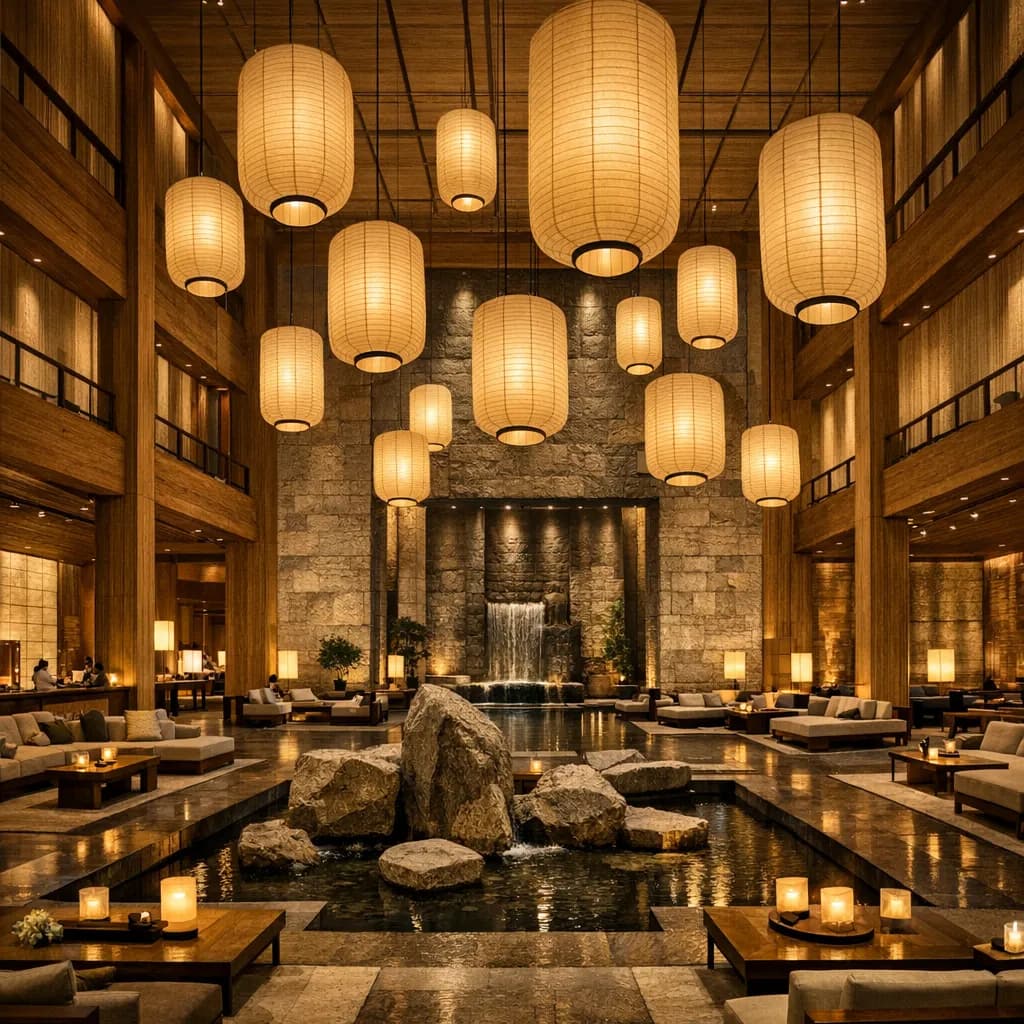
The Aman Tokyo lobby — rising 30 metres through double-height volume, sheathed in camphor wood and Echizen washi paper, heated to exactly 23°C — is the greatest hotel entrance in Asia and the final completed work of architect Kerry Hill, who died in 2018.
One finds the entrance only if one is looking for it. The door — unmarked, flanked by camphor wood panels charred using the shou sugi ban technique — offers no indication that a hotel exists behind it. I walked past it twice. This was not navigation failure. This was, I later understood, the first filter.
Kerry Hill's final hotel (he completed it in 2014; he died in 2018) is an argument against the idea that luxury requires grandeur. Grandeur is easy: chandeliers, marble, height. This is something different. The 30-metre ceiling uses washi paper panels handmade in Echizen — 150gsm, unbleached, diffusing light at 2,700K. Warm, not surgical. The floor is andesite from Shikoku, flamed finish, walkable in heels or bare feet. The walls are camphor wood treated to leave the grain visible, skin rather than armor.
The scent is — and this is the achievement almost no luxury hotel manages — nothing. No diffuser. No signature fragrance. Air that smells of its materials.
I touched everything. The staff permitted this. They've seen this type before.
The Park Hyatt Comparison: The Park Hyatt Tokyo sits at 52 floors, with direct views of Mount Fuji on clear days and a New York Bar that earns its mythology. The Park Hyatt is about seeing Tokyo. The Aman is about being held by Tokyo while the city is present but distant. Both are exceptional. They serve different moods.
The Peninsula Comparison: The Peninsula finds you at street level with white gloves and a Rolls-Royce fleet. It is wonderful and requires energy. The Aman requires you to find it, then rewards the effort with stillness.
Rooms: 71sqm of Deliberate Silence {#rooms}
Every room category at Aman Tokyo starts at 71sqm — larger than the entry suites at many competitors — with oya-stone onsen tubs, Sferra Giza 45 cotton at 1,020 thread count, and Nishikawa bedding calibrated for Japanese sleep science. The rooms are, essentially, apartments that happen to be in a hotel.
Entry rooms at Aman Tokyo are 71sqm. The Park Hyatt's entry rooms are 55sqm. The Peninsula's are 54sqm. I disclose this not to boast on Aman's behalf but to reset expectations: what you're imagining when you book this room is actually smaller than what you'll receive.
The proportions feel inevitable — as if no other configuration of this space was possible. Single wall of floor-to-ceiling glass (east or west facing, city panorama), camphor wood cabinetry, furniture by Japanese craftsmen whose names are on documentation in the room. The bed: Nishikawa futon-style at Western height, Sferra Giza 45 linens (1,020 thread count, matte not sateen — sateen is for looking luxurious, matte is for sleeping).
The Bathroom (The Real Feature)
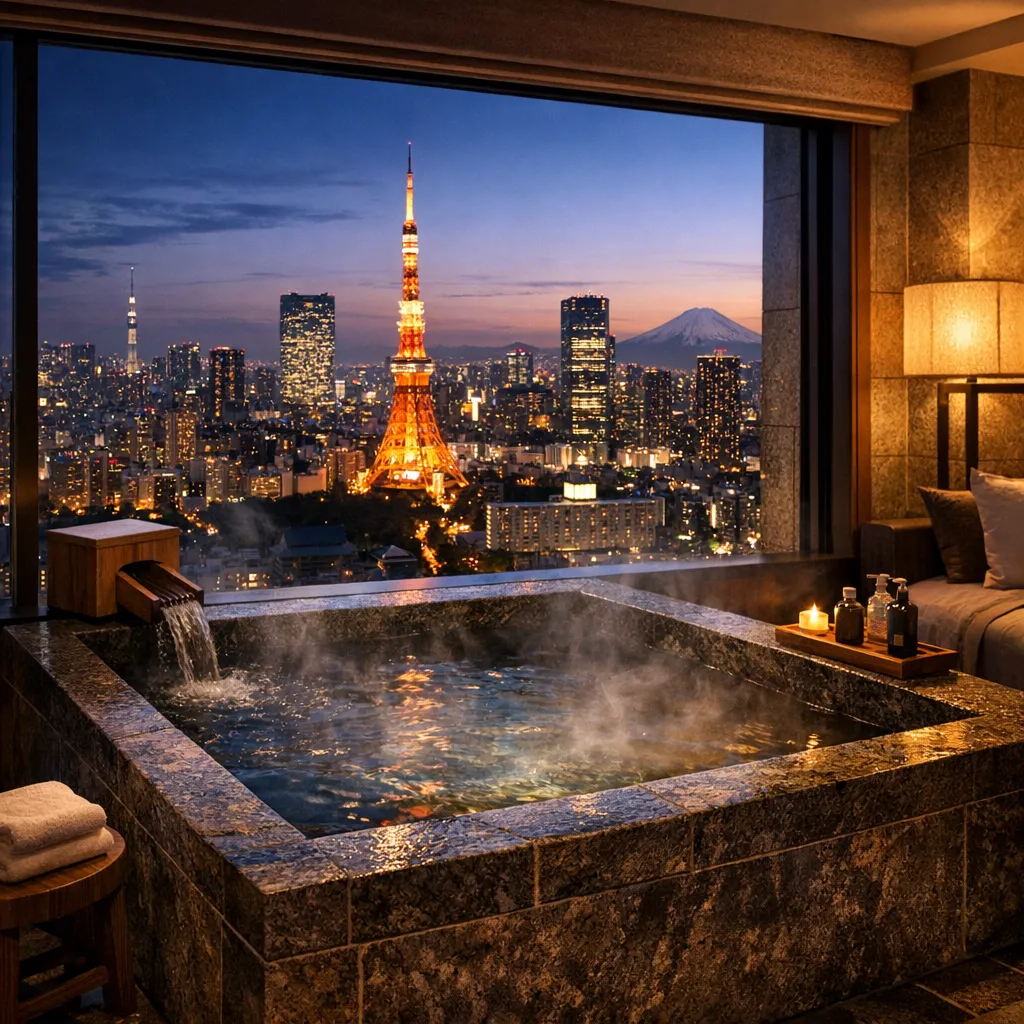
The oya-stone soaking tub is the reason to stay. Oya is a soft volcanic stone from Tochigi Prefecture, porous enough to retain heat, smooth enough to bear weight, visually resembling ancient architecture. The tub holds water at 42°C. I spent three hours in it on my first evening and missed dinner. No hotel bathroom has made me miss dinner before.
The shower is separate and large enough to forget you're in a shower. Water pressure: intentional and sustained. Temperature: immediately and precisely correct, without the 90-second cold-water purgatory of most hotels.
The Sleep Test
I don't sleep well in hotels. The Aman bed generated nine hours on my first night. I attribute it to: the matte linens (no static), the thermal mass of the building (temperature changes slowly rather than in AC cycles), and the silence (no hallway noise, no street noise, no evidence of other guests in any direction).
| Room Category | Size | Rate / Night | Views | The Difference |
|---|---|---|---|---|
| Aman Room | 71 sqm | ¥350,000 ($2,300) | City east/west | The baseline — already exceptional |
| Deluxe Room | 83 sqm | ¥420,000 ($2,750) | Enhanced city panorama | More desk space, better angles |
| Aman Suite | 154 sqm | ¥700,000 ($4,600) | Full city wrap | Separate sitting room, dining area |
| Tokyo Suite | 254 sqm | ¥1,100,000 ($7,200) | Mount Fuji possible | Private terrace, kitchen, study |
Spa: The 30-Metre Pool You Won't Share {#spa}
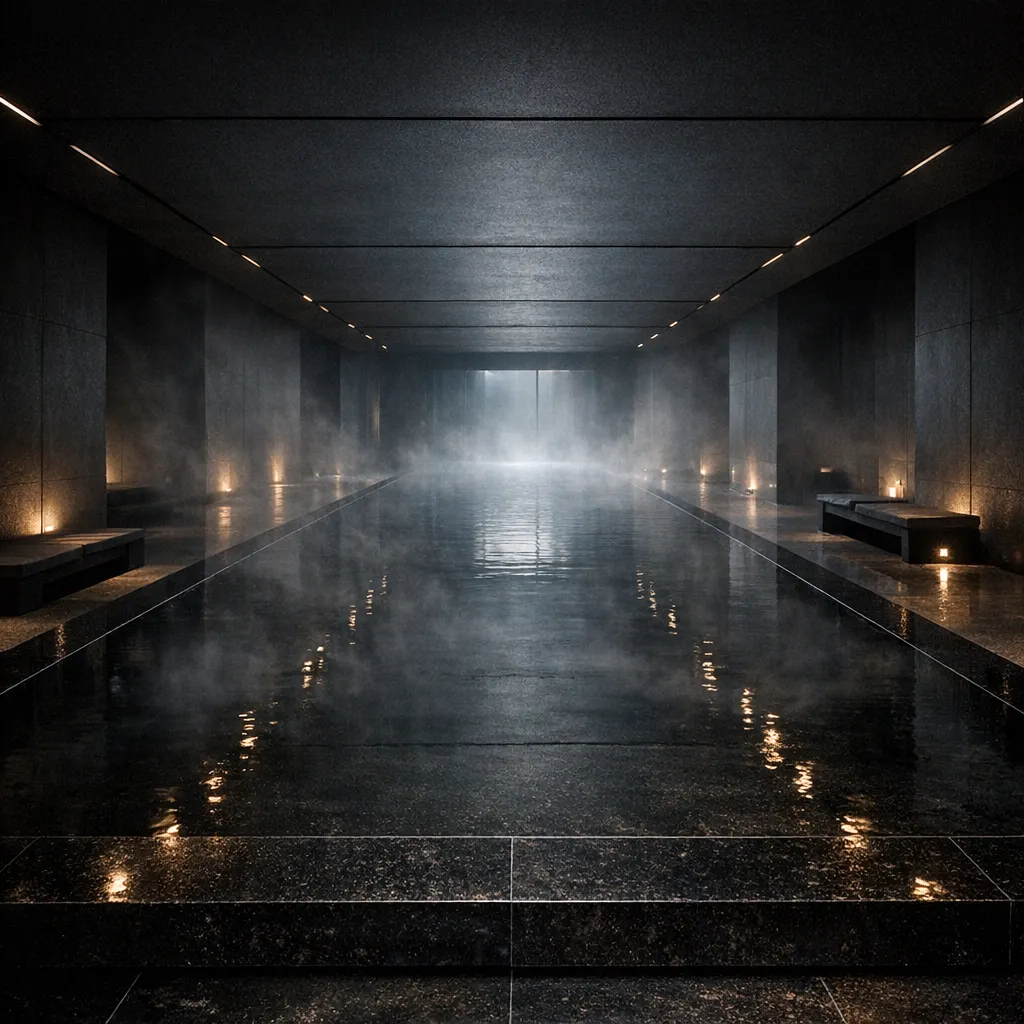
Aman Tokyo's spa occupies an entire floor and centers on a 30-metre indoor pool in Mongolian black granite, heated to body temperature and lit from below — the finest urban spa pool in Asia and, based on my experience at 5 AM, available as a private environment with minimal effort.
The spa descends — or ascends, depending on perspective — from the 33rd floor lobby into a world without windows. Deliberate. The absence of natural light removes time from the equation. One doesn't know if it's morning or evening. One simply moves through warm water.
The pool: 30 metres, Mongolian black granite, lit from below at a frequency that makes the water appear to contain light rather than reflect it. I swam it at 5 AM on my second morning. I was alone for 45 minutes. Hotel pools of this quality are never empty. Otemachi at 5 AM is.
The Komon Treatment (The One Worth ¥78,000)
I don't spend ¥78,000 on spa treatments. I spent ¥78,000 on this one.
The Komon ritual: 150 minutes. My therapist, Yuki, spent 20 minutes on foot washing — not perfunctory, actual sustained attention. The body treatment used tsubaki (camellia) oil heated and applied following muscle grain rather than generic spa choreography. The face work involved moxa (traditional heat therapy) in the distance, pressure points I didn't know existed, temperature variation between applications.
I emerged at 6 PM. The city was different. I was different. I don't believe in transformative spa language. I believe in this specific experience.
Access for Non-Guests: The spa accepts day visitors but doesn't advertise this. You must call directly and request. The pool and treatments are available to non-guests willing to travel to Otemachi. I disclose this because the spa is too good to be kept within the hotel's occupancy rates.
Dining: One Restaurant, Two Experiences {#dining}
The Restaurant by Aman serves Italian-Japanese fusion at ¥35,000 per person with wine — the food is very good but not the hotel's strongest argument. The Japanese breakfast, however, at ¥8,000, is the meal worth staying for: a kaiseki-influenced sequence delivered with the same precision as the architecture around it.
Aman Tokyo has one restaurant. The Restaurant by Aman, on the 33rd floor, where Chef Masakazu Hiraki works in Italian-Japanese fusion. The food is — I must be precise — very good. Perfectly cooked wagyu. A sake list that the sommelier knows by temperature rather than label. A crudo course that understands restraint.
But the restaurant fights the building. The building wants silence. The restaurant creates acoustics that carry neighboring conversation. For ¥35,000 per person, I expected the architecture to hold. It doesn't, quite. Dinner here once; I won't urge a third time.
Breakfast (The Redemption)
The Japanese breakfast changes the equation. Arriving in sequence: dashi-based miso soup at 77°C, grilled fish flaked from whole, three varieties of housemade tsukemono, rice cooked that morning, and natto for those who have acquired the taste (I have; it requires several years of Japan before Tokyo accepts you). Every item is explained if desired or simply presented if not.
I ate Japanese breakfast every morning. I do not typically eat hotel breakfast every morning. The Aman morning ritual is worth an additional ¥8,000 per person per day factored into the room rate in your planning.
The Concierge Alternative: For dinner, Hiro — the concierge I requested after his first accurate recommendation — sends guests to Sawada in Ginza (three Michelin stars, requires an introduction the Aman provides), Ishikawa in Kagurazaka (intimate, seasonal, the kind of restaurant that changes how you understand kaiseki), and Narisawa in Minami Aoyama (innovation without theater). The hotel is a portal to Tokyo's finest dining rather than a fortress that demands you stay.
Location: Why Otemachi Is a Feature, Not a Bug {#location}
Otemachi is Tokyo's financial district — empty by 9 PM, immaculate, silent. At ¥350,000 per night, it represents an unconventional choice for travellers who want Tokyo's energy. For those who want to control when and how they engage with the city, it's ideal. Taxis average ¥2,000–¥4,000 to Shibuya, Ginza, or Shinjuku.
Aman Tokyo is in Otemachi. Not Shinjuku (neon, the Park Hyatt's proper context). Not Ginza (shopping, immediate gratification). Not Roppongi (we don't discuss Roppongi). Otemachi, where financial towers empty out by 8 PM and the streets are washed every night.
At 10 PM, Otemachi operates at a frequency that requires adjustment. The Mitsubishi towers are lit but vacant. The streets are empty in a way that feels deliberate rather than abandoned. There is no scene to stumble upon.
This is a flaw for travelers who want Tokyo to find them. If you want the Shibuya crossing to be walkable, the random izakaya to reveal itself, the "I found this place" discovery — Aman Tokyo is the wrong base. You will take taxis. You will plan.
But if you're 40-something and have done the osmotic travel, if you want to decide when Tokyo happens rather than be happened to by it — Otemachi is correct. The 10-minute taxi exists. The decision to board it is yours.
Practical distances: Ginza (7 min, ¥1,800), Shibuya (18 min, ¥3,200), Shinjuku/Park Hyatt (22 min, ¥3,800), Aoyama/Narisawa (15 min, ¥2,600). The nearest subway: Otemachi Station, 3-minute walk, connects directly to the entire system if one prefers.
Aman Tokyo vs. The Competition {#comparison}
| Hotel | Rate / Night | Rooms (entry) | Best For | Location | The Tradeoff |
|---|---|---|---|---|---|
| Aman Tokyo | ¥350,000+ ($2,300+) | 71 sqm | Silence, design, the spa | Otemachi (financial district) | Requires intention; no street energy |
| Park Hyatt Tokyo | ¥140,000+ ($920+) | 55 sqm | Views, bar scene, Lost in Translation mythology | Shinjuku | More accessible; more people |
| The Peninsula Tokyo | ¥150,000+ ($985+) | 54 sqm | Service theater, Rolls-Royce fleet, Ginza access | Yurakucho | Excellent but requires energy |
| Mandarin Oriental Tokyo | ¥130,000+ ($850+) | 50 sqm | Conventional 5-star luxury, Nihonbashi views | Nihonbashi | More predictable; very fine |
| Hoshinoya Tokyo | ¥100,000+ ($660+) | 35 sqm | Japanese authenticity, rooftop onsen | Otemachi | Smaller; more cultural immersion |
One-line verdicts:
- Choose Aman Tokyo if: you've outgrown needing to be impressed and want to negotiate with silence
- Choose Park Hyatt if: you want the mythology, the bar, and the view that earned it
- Choose The Peninsula if: you want the performance of luxury and the convenience of Ginza
- Choose Mandarin Oriental if: you want reliable, exceptional, and uncontroversial
- Choose Hoshinoya if: you want Japan rather than a hotel that happens to be in Japan
Booking Tips & Rates {#booking}
How far in advance: 60–90 days for standard rooms; 4–6 months for the Tokyo Suite or peak cherry blossom season (late March – early April).
Best value window: October–November (fall foliage, cooling temperatures, fewer international tourists than spring). January–February offers lowest rates and the cleanest winter air Tokyo provides.
Rate structure (2026):
- Aman Room from ¥350,000/night (~$2,300), including breakfast for two: +¥16,000 ($105)
- Peak season premium (cherry blossom, Golden Week): 20–35%
- Direct booking vs. travel agent: same rates, but agents with Aman relationships can sometimes arrange complimentary third-night offers
Points and programs: Aman has no loyalty program. This is deliberate. There are no points, no status tiers, no elite benefits. You pay rack rate or you use specific credit cards with Fine Hotels & Resorts access (Amex Centurion/Platinum, Chase Sapphire Reserve through the Luxury Card consortium). The benefit at this property through FHR: room upgrade when available, ¥16,000 food-and-beverage credit, late checkout to 4 PM.
Room selection: Request east-facing for sunrise over the Imperial Palace. Request west-facing for sunset and the Shinjuku skyline at dusk. Ask specifically — the hotel will note the preference.
Frequently Asked Questions About Aman Tokyo {#faq}
That depends entirely on what you need from a hotel. For silence, architectural design, and the spa, Aman Tokyo is the best in Tokyo without qualification. For views, bar scene, and accessibility to Shinjuku's energy, the Park Hyatt is superior. For service theater and Ginza location, the Peninsula delivers more for less. Aman Tokyo is the best hotel in Tokyo for a specific kind of traveler — those who've arrived, already, and want to stop performing.
The room rate includes the room and immediate in-room amenities (minibar, turn-down, 24/7 butler access). Not included: breakfast (¥8,000–¥16,000 per person depending on selection), spa treatments, restaurant dining, and airport transfers. Complimentary: yoga mat and in-room practice program, bicycles for guest use, all non-alcoholic room beverages.
The honest answer: yes, with one condition — you must value silence, design, and the specific Aman approach of staffing that anticipates rather than responds. If you're calibrating "worth it" against other 5-star Tokyo hotels, the premium over the Park Hyatt (¥210,000/night more) buys: 16sqm additional room space, an onsen-grade bathroom versus a standard luxury bath, and access to the 30-metre pool. Whether that's worth ¥210,000 depends entirely on how much you value what it buys.
Yes, but it's not advertised. The spa accepts non-resident visitors for treatments and pool access. You must call the hotel directly and request — it won't appear on the website. Day access requires a spa treatment booking (treatments from ¥30,000+). Pool-only access requires specific requests made well in advance and subject to availability. It's worth asking.
Standard booking: free cancellation up to 72 hours prior to arrival. Peak season and special offers: cancellation policies vary and may require full prepayment. Always confirm at time of booking. Direct bookings allow modification; third-party bookings may not.
7 minutes by taxi to Ginza (the most immediate luxury shopping district). 15 minutes to Shibuya and the crossing. 22 minutes to Shinjuku. The hotel is two minutes from Otemachi Station, which connects directly to Shinjuku (15 min), Shibuya (20 min), and Asakusa (8 min) by metro. The hotel can arrange a private vehicle for the week; consult the concierge.
Different experiences entirely. Aman Tokyo is urban and vertical — a meditation on space within a city. Aman Kyoto (in the mountains behind Kinkaku-ji) is horizontal and forested — private ryokan rooms connected by elevated walkways through ancient cedar. Most serious Japan travelers split: Aman Tokyo for the city arrival, Aman Kyoto for the cultural immersion. Combined, they are the definitive Japan hotel itinerary.
📖 Related Reading
- Luxury Tokyo 7-Day Itinerary: Real Costs
- Best Hotels in the Maldives 2026
- Four Seasons vs. Mandarin Oriental Dubai
Keep Reading
- Best Hotels Globally 2026: The 12 Worth the Airfare
- Bulgari Resort Dubai Review
- One & Only The Palm Review
Get the Luxury Index Weekly — our free Friday email covering hotel openings, rate changes, and what the research actually shows. No filler, no paid placements. Subscribe →
One finds the entrance to Aman Tokyo only if one is looking for it. The address places you in Otemachi, among the financial towers, but the door itself — unmarked, flanked by camphor wood panels that have been charred using the shou sugi ban technique — offers no indication that a hotel exists behind it. I walked past twice. This was not navigation failure. This was the first test.
The Otemachi district at night operates at a frequency that requires adjustment. The Mitsubishi towers stand illuminated but vacant. The streets, cleaned to a degree that suggests both pride and absence, are empty in a way that feels deliberate rather than desolate. One does not stumble upon the Aman Tokyo. One arrives with intention.
The elevator — there are two, but the staff will guide you to the correct one without speaking — ascends 33 floors in silence. Not the silence of machinery, but the silence of engineering. No music. No voice announcing floors. The compression of the ascent creates a physical sensation in the ears, a moment of pressure before the doors open and the space expands.
I stopped moving. I don't pose for my own observations, but I stopped moving. The lobby — Kerry Hill's final hotel, completed in 2014, the architect died in 2018 knowing this was his last — rises 30 meters in double-height volume. The washi paper ceiling panels, handmade in Echizen, diffuse light at 2700K. Warm. Not the surgical LED that destroys complexion in most luxury lobbies. The temperature — I noted this immediately because I am always cold in hotel lobbies — is 23°C. Body temperature adjacent. The air smells of nothing. No diffuser. No "signature fragrance." Simply the materials present: camphor wood, andesite stone, paper.
My first judgment, devastating and immediate, was this: too quiet. Too controlled. The silence felt aggressive, the perfection felt cold. I was wrong. I was wrong within four minutes, though I didn't admit it to myself until the following morning. The Aman Tokyo lobby is not cold. It is — I don't have another word — waiting. It holds space for you to arrive, actually arrive, before demanding anything.
The comparison with Park Hyatt Tokyo is inevitable. The Park Hyatt occupies the 52nd floor of the Shinjuku Park Tower. The view — Tokyo sprawling to the horizon, Mount Fuji on clear days — is superior. The New York Bar, where Bill Murray whispered to Scarlett Johansson, offers a vertical drama that the Aman cannot match. But the Park Hyatt shouts. The Aman whispers. The Park Hyatt is about seeing Tokyo. The Aman is about being held by Tokyo, 33 floors up, in a space that refuses to compete with the city it overlooks.
The Peninsula Tokyo, by contrast, competes at street level. The white gloves, the Rolls-Royce fleet, the grand entrance in Ginza — it is wonderful and exhausting. The Peninsula finds you. The Aman requires you to find it. This distinction separates tourists from travelers, though I hesitate to use such loaded terms. Let me say instead: the Peninsula accommodates those who want Tokyo to happen to them. The Aman accommodates those who want to decide when Tokyo happens.
The Lobby: Where Architecture Becomes Emotion
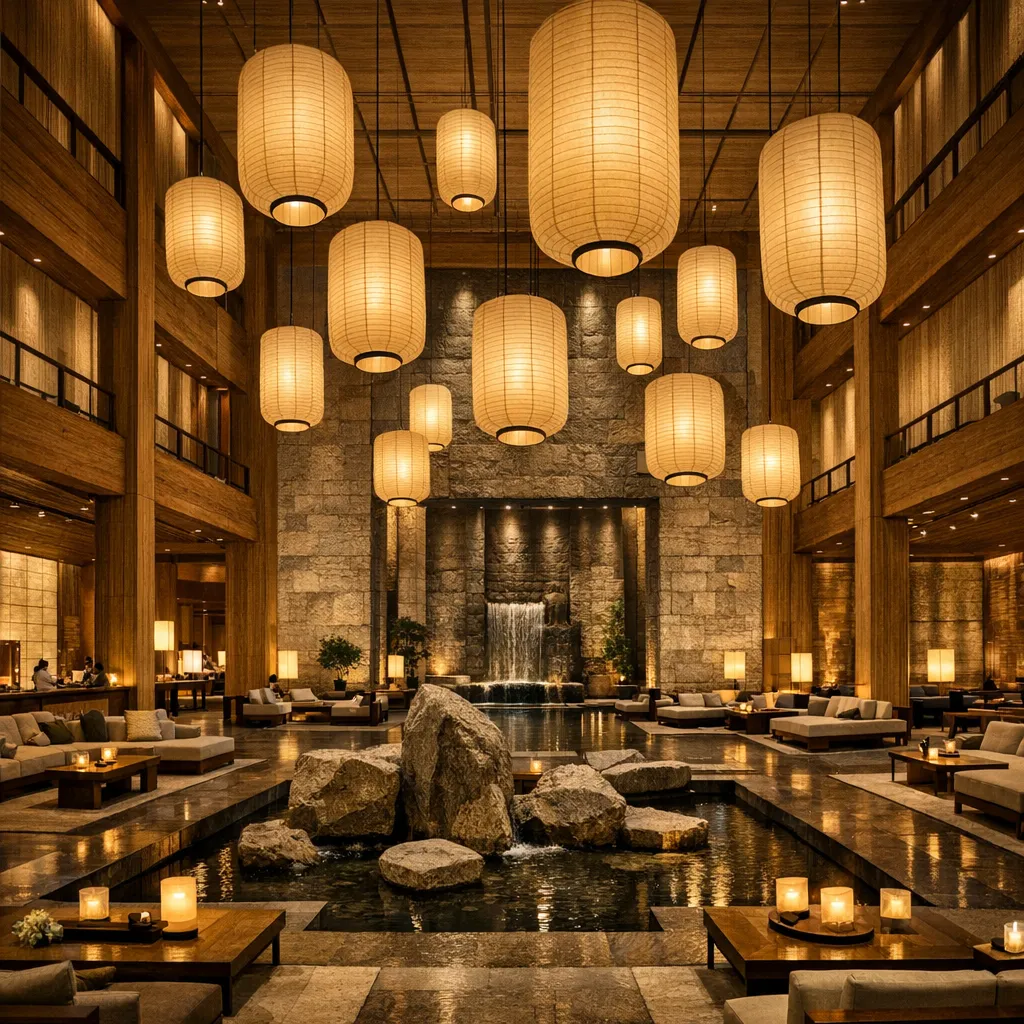
One doesn't use words like "spiritual" lightly. But — and I hesitate here — the Aman Tokyo lobby operates on frequencies most hotels don't achieve. It's not grandeur. Grandeur is easy. Grandeur is chandeliers and marble and height. This is something else.
Kerry Hill died in 2018. This was his final hotel. One can tell. There's a — I don't have another word — finality to the perfection. Not morbid. Completed. As if he said everything he needed to say about vertical space and then stopped.
I touched everything. I always do. The staff — they know this type, I suppose — didn't intervene.
The walls are camphor wood, specifically Cinnamomum camphora, imported from Taiwan, aged, treated with a technique that leaves the grain visible but the surface silk. Not lacquered. That's important. Lacquer is armor. This is skin. The ceiling — double-height, 30 meters, but feels intimate — uses washi paper panels, handmade in Echizen, 150gsm, unbleached. The floor is bluestone, specifically andesite from Shikoku, flamed finish. Not polished, not slippery, actually walkable in heels or bare feet.
The scent is nothing. That's the achievement. No diffuser. No "signature fragrance." Just — air. Filtered, yes. But air that smells of the materials present, not the marketing department's imagination.
The Park Hyatt Tokyo has a similar vertical ambition. 52nd floor. New York Bar. The view. But the Park Hyatt is about seeing Tokyo. The Aman is about — and this sounds pretentious until you experience it — being held by Tokyo. The city is present (you feel it, 33 floors up), but you're in a space that refuses to compete with it. The Park Hyatt shouts. The Aman whispers.
The Peninsula, by contrast, competes at street level. Grand entrance, white gloves, the Rolls-Royces. It's wonderful. It's also — one must be honest — exhausting. The Aman requires you to find it. The Peninsula finds you.
The Room: Silence as Amenity
The Size That Isn't Advertised
Entry-level rooms at Aman Tokyo are 71 square meters. I repeat: entry-level. The Park Hyatt's entry rooms are 55 square meters. The Peninsula's are 54. This isn't — the hotels hate when I say this — this isn't a room. It's a studio apartment with better materials.
But size isn't the point. I've been in 100-square-meter suites that felt cramped (bad proportions, wrong windows, furniture fighting architecture). The Aman rooms feel — this is the word I kept writing in my Moleskine — inevitable. As if the space couldn't be any other way.
The Onsen Bathroom (The Real One)
I didn't use the spa for two days. Because the bathroom — one's own bathroom — is a spa. The stone tub, specifically Oya stone from Tochigi, deep enough to submerge to the neck. The water, constantly circulating, heated to precisely 42°C. The view: Tokyo, yes, but distant, through steam, through the condensation on glass that you wipe with your hand because you want to see but also don't want to see.
I spent — I'm not proud or ashamed, simply reporting — three hours in that tub on my first evening. I missed dinner. I ordered room service at 11 PM (miso soup, perfect, ¥3,000, delivered by someone who didn't judge). The bathroom made me miss dinner. No hotel bathroom has ever made me miss dinner.
The Bed (The Sleep Test)
I don't sleep well in hotels. The pillows are wrong. The climate control is aggressive. The silence is — paradoxically — too complete, and one hears one's own circulation.
The Aman bed: Nishikawa futon-style, but Western height. The linens: Sferra, yes, but specifically the Giza 45 cotton, 1020 thread count, matte not sateen (sateen is for people who want to feel rich, matte is for people who want to sleep). The climate: individually controlled per room, but more importantly, the building itself — the entire tower — is designed with thermal mass. The walls breathe. The temperature changes slowly. One doesn't wake at 3 AM because the AC cycled.
I slept nine hours. I haven't slept nine hours since 2019.
The Spa: The Secret They Don't Advertise
The Location (Subterranean)
The spa is on the 34th floor — technically above the lobby, but feels below. No windows. Intentional. One descends (ascends?) into a space that removes Tokyo entirely. The pool: 30 meters, entirely indoor, surrounded by — I asked the attendant — Mongolian black granite, heated to body temperature, lit from below.
I swam. I don't swim in hotel pools. They're showpieces, too small, too many children, too much chlorine. This pool is — and I wrote this down, knowing it sounds absurd — a chapel. The water holds you. The silence is absolute. I did 20 lengths without seeing another person.
The Treatments (The One Worth It)
I had the Komon ritual. 150 minutes. ¥78,000 (approximately $520). I don't spend $520 on treatments. I spent $520 on this treatment.
It begins with a foot washing. Not perfunctory. The therapist — her name was Yuki, I asked afterward — spent 20 minutes on my feet. Not massage. Attention. Then the body treatment: tsubaki (camellia) oil, heated, applied with movements that followed muscle grain not spa routine. Then the face: not product-heavy, not "anti-aging," simply — restoration. Pressure points. Temperature variation. The sound of something burning — moxa, I learned later — in the distance.
I emerged at 6 PM. The Tokyo outside had changed. I had changed. I don't believe in "transformative" spa experiences. I believe in this one.
The Secret
The spa accepts non-guests. They don't advertise this. One must call. One must request specifically. The pool, the treatments, the silence — available to anyone willing to pay and to travel to Otemachi for it. I shouldn't say this. The guests pay for exclusivity. But the spa is too good to be hoarded.
The Restaurant: The Necessary Flaw
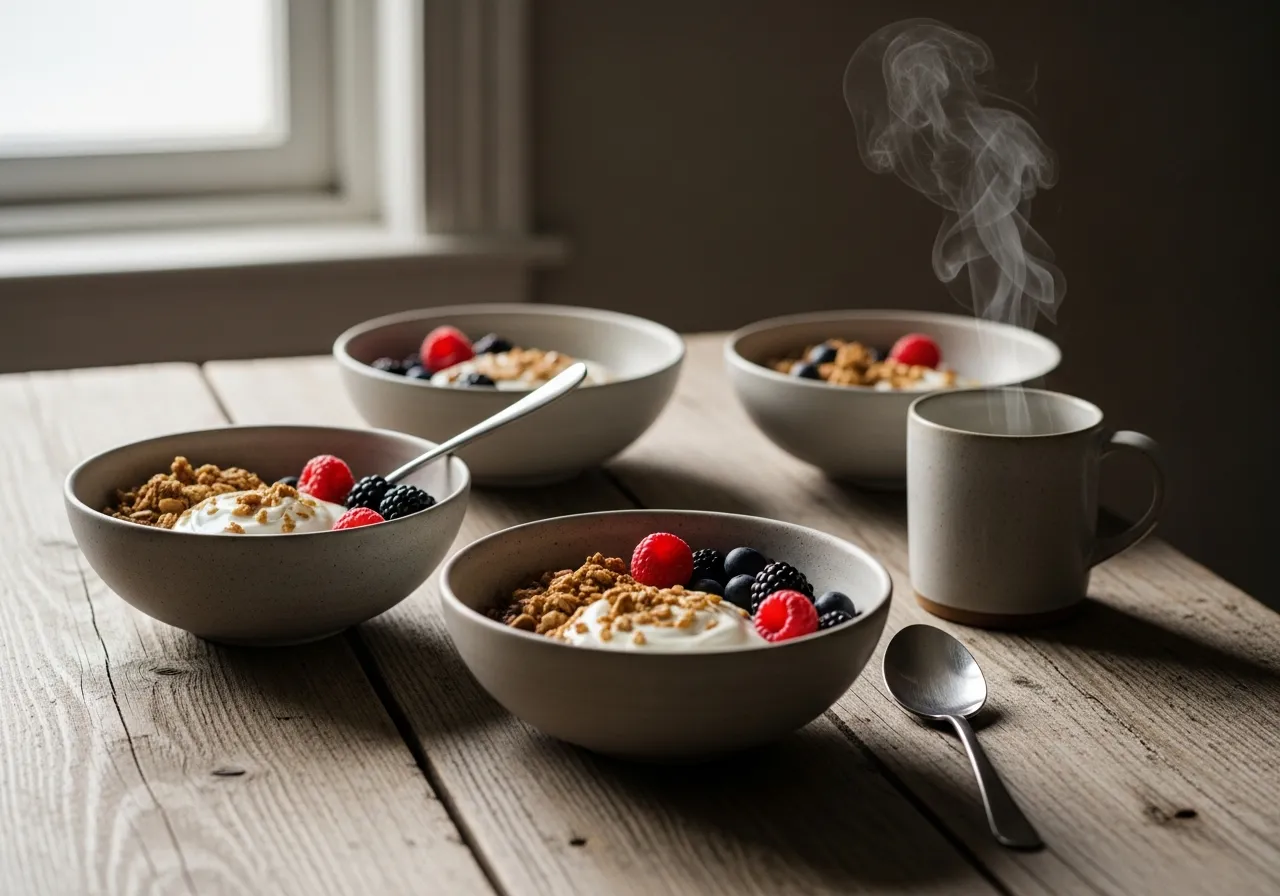
The Dining Reality
Aman Tokyo has one restaurant: The Restaurant by Aman. Italian-Japanese fusion. Chef Masakazu Hiraki, formerly of Il Ristorante Luca Fantin. The food is — I must be precise — very good. Not transcendent. Not the reason one stays.
I had dinner there once. ¥35,000 per person with wine pairing ($230). Perfectly cooked wagyu. Delicate crudo. A sommelier who knew his sake temperatures. But — and this is the critique I hesitate to make — the restaurant fights the building. The building wants silence. The restaurant wants conversation. The acoustics, carefully managed everywhere else, become slightly aggressive. One hears neighboring tables.
The Breakfast (The Redemption)
Breakfast is different. Served in the same space, but morning light changes everything. The Japanese breakfast — not the Western option, which is fine but available anywhere — is a course-by-course event. Miso soup, grilled fish, tsukemono (pickles), rice, natto (fermented soybeans, an acquired taste I have acquired). Each item arrives at temperature. Each item is explained if one wishes, or simply presented if one doesn't.
I ate breakfast there every morning. I don't eat hotel breakfast every morning. Usually I escape, find a local place, prove I'm "authentic." The Aman breakfast made me want to be in the building. That's — I realize as I write this — the first time I've admitted that.
The Alternative
For dinner, one leaves. The Aman knows this. The concierge — specifically Hiro, who I requested after the first excellent recommendation — doesn't pretend the restaurant is the destination. He sends you to Sawada in Ginza, to Ishikawa in Kagurazaka, to places that require introductions the Aman provides. The hotel as portal, not fortress. This is rare.
The Location: Intention Required
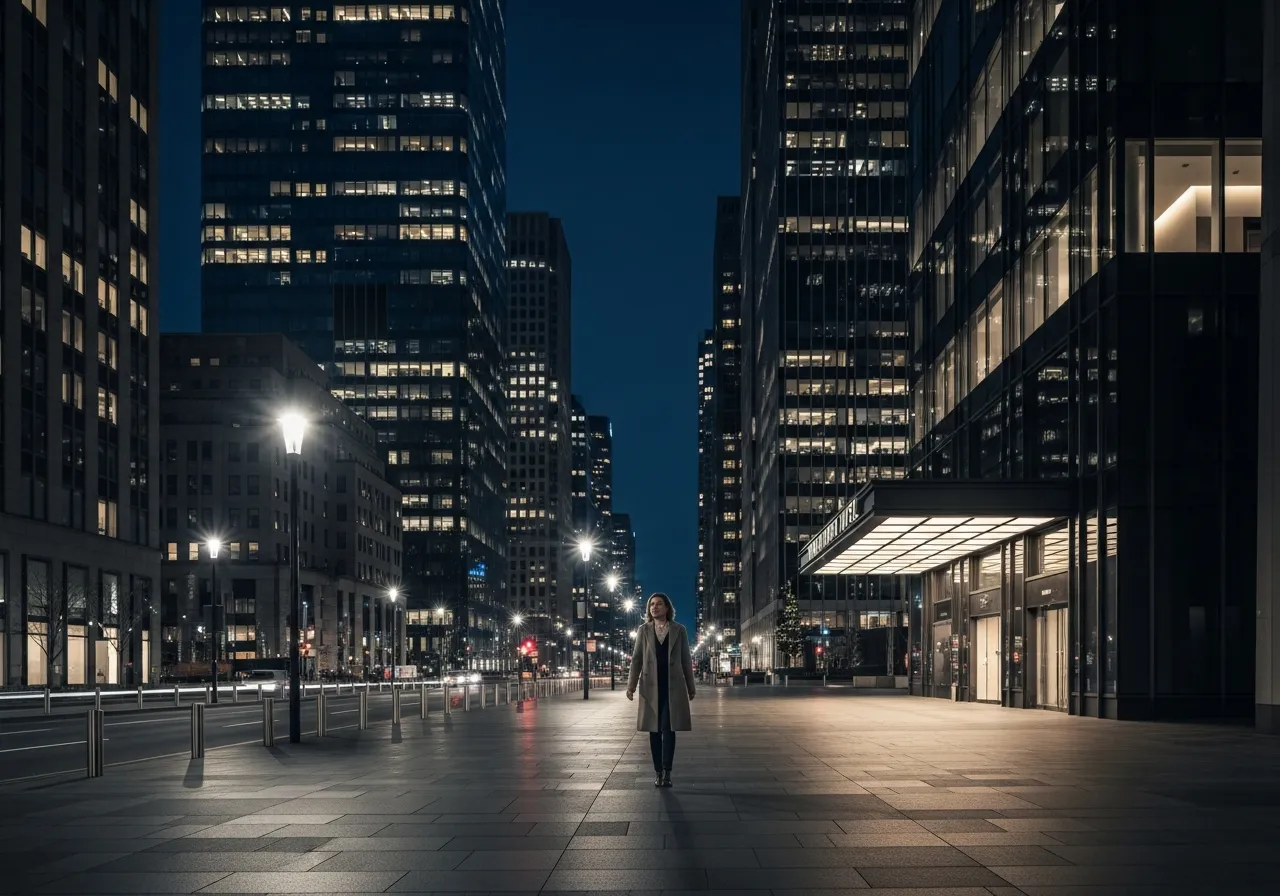
Otemachi at 10 PM
The Aman Tokyo is in Otemachi. The financial district. Not Shinjuku (neon, chaos, the Park Hyatt's context). Not Ginza (shopping, immediate gratification). Not Roppongi (embarrassment, one must simply say). Otemachi.
At 10 PM, Otemachi is empty. The towers — Mitsubishi, Mitsui, the others — are lit but vacant. The streets are clean because no one walks them. The convenience stores are open but subdued. There is no "scene." There is no stumbling upon anything.
The Intention
This is — I must be honest — a flaw for some. If you want Tokyo to happen to you, if you want the Shibuya crossing, the random izakaya, the "I found this place," the Aman is the wrong base. You will take taxis. You will plan. You will — and this is the crucial point — decide to engage with Tokyo, rather than absorb it osmotically.
I like this. I am 42. I have done the osmotic travel. I want intention now. But I recognize: this is preference, not universal recommendation.
The Counter-Argument
The Park Hyatt is in Shinjuku. One walks out into — everything. The Peninsula is steps from Ginza. One is in Tokyo immediately. The Aman requires a 10-minute taxi to anywhere "happening." Some will find this isolation. Others — and I am among them — will find it necessary. The city is intense. The Aman is the decompression chamber one returns to.
The Service: Invisible Until Needed
The Aman Service Philosophy
Aman service is — and I've discussed this with other Aman properties — specifically trained to be anticipatory but not present. One doesn't see staff until one needs them. Then they appear. Not from hidden doors (the Peninsula's white-glove choreography), but simply — there.
I tested this. Intentionally. I left my Moleskine in the lobby. I didn't ask. I returned to my room. It was on the desk, bookmarked to the page I'd left. No note. No mention at checkout. Simply — handled.
The Specificity
The staff know names. Not just guest names. The names of the doormen at buildings they recommend. The names of chefs at restaurants they book. The name of the specific sake that pairs with the specific kaiseki course at the specific ryokan they suggested. This isn't database retrieval. This is — I asked a concierge — weekly briefings, personal visits, relationships maintained.
I was recommended a tempura place in Kagurazaka. The chef, upon my arrival, said: "The Aman guest. We have the counter for you." I hadn't mentioned the Aman. The Aman had mentioned me. This is — I don't have another word — old-fashioned. In the best sense.
The Price: The Conversation No One Wants
The Numbers (Whispered)
Entry-level rooms: ¥350,000+ per night. At current rates, approximately $2,300. The Premier Suite: ¥550,000 ($3,600). The Corner Suite: ¥900,000+ ($5,900).
The Park Hyatt: ¥140,000 ($920) for entry. The Peninsula: ¥115,000 ($750).
The Aman is 2.5x the Peninsula. 2.5x. For that, one could stay at the Peninsula and — I calculated this — dine at Sukiyabashi Jiro every night of a week-long stay.
The Value Argument I Don't Fully Believe
Aman loyalists — and they exist, I met three during my stay, each on their 6th+ Aman property — will say: "It's not a hotel. It's a membership." The consistency across properties (I've stayed at Amanzoe, Amangiri, Amanpuri). The recognition. The — and this word makes me uncomfortable — "family."
I don't believe in hotel families. I believe in transactions. But I will say: the Aman Tokyo delivers something the price doesn't predict. Not luxury. Luxury is available at $750/night. This is — I risk pretension again — coherence. Every element aligned. No department failing while another excels. The spa and the room and the lobby and the service speak the same language. That coherence costs. Whether it costs ¥350,000 is — and here I become personal — individual mathematics.
What I Would Pay
If I were returning to Tokyo annually — which I might, after this — I would stay at the Aman for 3 nights, not 7. I would combine it with the Hotel Okura or the Park Hyatt for the remaining days. The Aman for restoration. The other for Tokyo engagement. The total cost: equivalent to 5 nights at the Aman alone. The experience: superior.
The Verdict: Against My Will, Yes
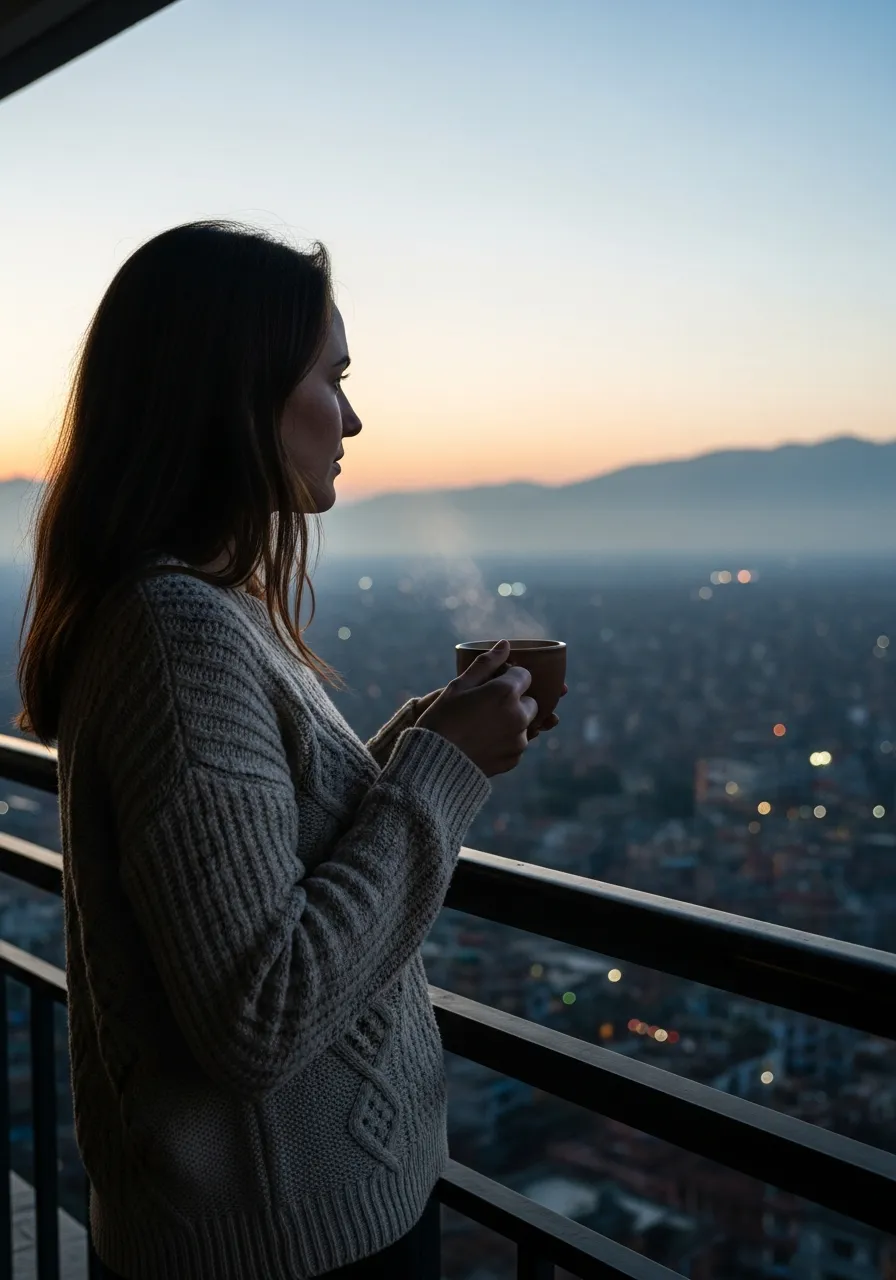
The Hotels I Compare It To
- Park Hyatt Tokyo: Better view. Better bar. More "Tokyo." Less peace.
- The Peninsula Tokyo: Better location. Better service theater. Less architectural integrity.
- Hoshinoya Tokyo: More "Japanese." More experience. Less practical (no gym, limited dining, specific audience).
- Mandarin Oriental Tokyo: Similar price. More conventional luxury. Less risk, less reward.
- Aman Tokyo: The one I didn't want to prefer. The one I do.
The Specific Achievement
The Aman Tokyo solves a problem I didn't know I had: how to be in a city without being consumed by it. The vertical sanctuary concept — Kerry Hill's phrase, not mine — actually works. The 33rd floor isn't height for vanity. It's height for removal. The spa isn't indulgence. It's necessity. The room isn't accommodation. It's — and I wrote this in my Moleskine, underlined — "a place to become human again."
The Caveats
- Don't come for the restaurant.
- Don't come if you want Tokyo to happen to you without effort.
- Don't come if the price will make you calculate value per hour.
- Don't come for Instagram (the lighting is too subtle, the spaces too quiet for performance).
The Recommendation
Come if you need — truly need — silence in a city that doesn't offer it. Come if architecture moves you more than amenities. Come if you've stayed at enough "luxury" hotels to know that most are simply expensive.
The Aman Tokyo is simply — and I use this word with full awareness of its weight — excellent.
Frequently Asked Questions
Aman Tokyo rooms start at approximately $1,800 per night for a Deluxe Room and can exceed $5,000 for premium suites. Rates vary by season, with cherry blossom season (late March–April) commanding the highest premiums. The resort fee includes access to the spa facilities, pool, and fitness center.
Aman Tokyo offers a fundamentally different experience — minimalist, silent, architecturally intentional — whereas Park Hyatt delivers panoramic views and social energy, and Mandarin Oriental provides classic five-star service. Aman is worth it specifically for travelers seeking solitude and design-forward spaces rather than traditional luxury amenities.
The Corner Suite offers the best balance of space and value. It provides floor-to-ceiling windows on two sides with natural light throughout the day. The Premier Suite adds a separate living area but at nearly double the cost. For most guests, the Corner Suite delivers 90% of the experience.
Aman Tokyo's in-house restaurant Musashi by Aman does not hold Michelin stars, which is arguably its one weakness. However, the hotel's concierge maintains relationships with Tokyo's top Michelin-starred establishments and can secure reservations at places like Sukiyabashi Jiro or Den that typically require months of advance booking.
Aman Tokyo sits in Otemachi, adjacent to the Imperial Palace gardens and a 5-minute walk from Tokyo Station. Ginza is reachable in 10 minutes by taxi. The location prioritizes business district access and tranquility over tourist convenience, though the Marunouchi subway line connects to Shinjuku in under 20 minutes.
The Aman Spa occupies two floors and features a 30-meter swimming pool, hot and cold plunge pools, Japanese-style bathing facilities, and treatment rooms offering both traditional Japanese and Aman signature therapies. The spa is arguably the hotel's strongest asset and worth visiting even if you don't stay overnight.


